This article is part of Bigtent Outdoors’ new Camping Expert Series, where we share practical, field-tested cold tent solutions from experienced creators and outdoor specialists.
A Complete Guide to Winter Tent Heating, Airflow, Condensation Control, and Heating System Optimization
Winter camping isn’t difficult because of the cold.
It’s difficult because most campers don’t understand what’s happening inside the tent—the constant push and pull between conduction, convection, radiation, humidity, and ventilation.
Once you understand these five forces, you’ll know exactly why your tent gets cold and how to keep it warm safely and efficiently. This guide simplifies the physics of warmth into clear, practical steps anyone can apply.

🔥 1. The Three Heat Transfer Principles That Solves A Cold Tent
All winter tents, from ultralight to basecamp-sized, follows the same three laws of heat transfer. Understanding this allows you to choose the right gear.
1. Conduction (Heat Loss)
Cold surfaces such as the ground or tent walls pull warmth away from your body.
2. Convection (Air Circulation)
Warm air rises, cold air sinks.
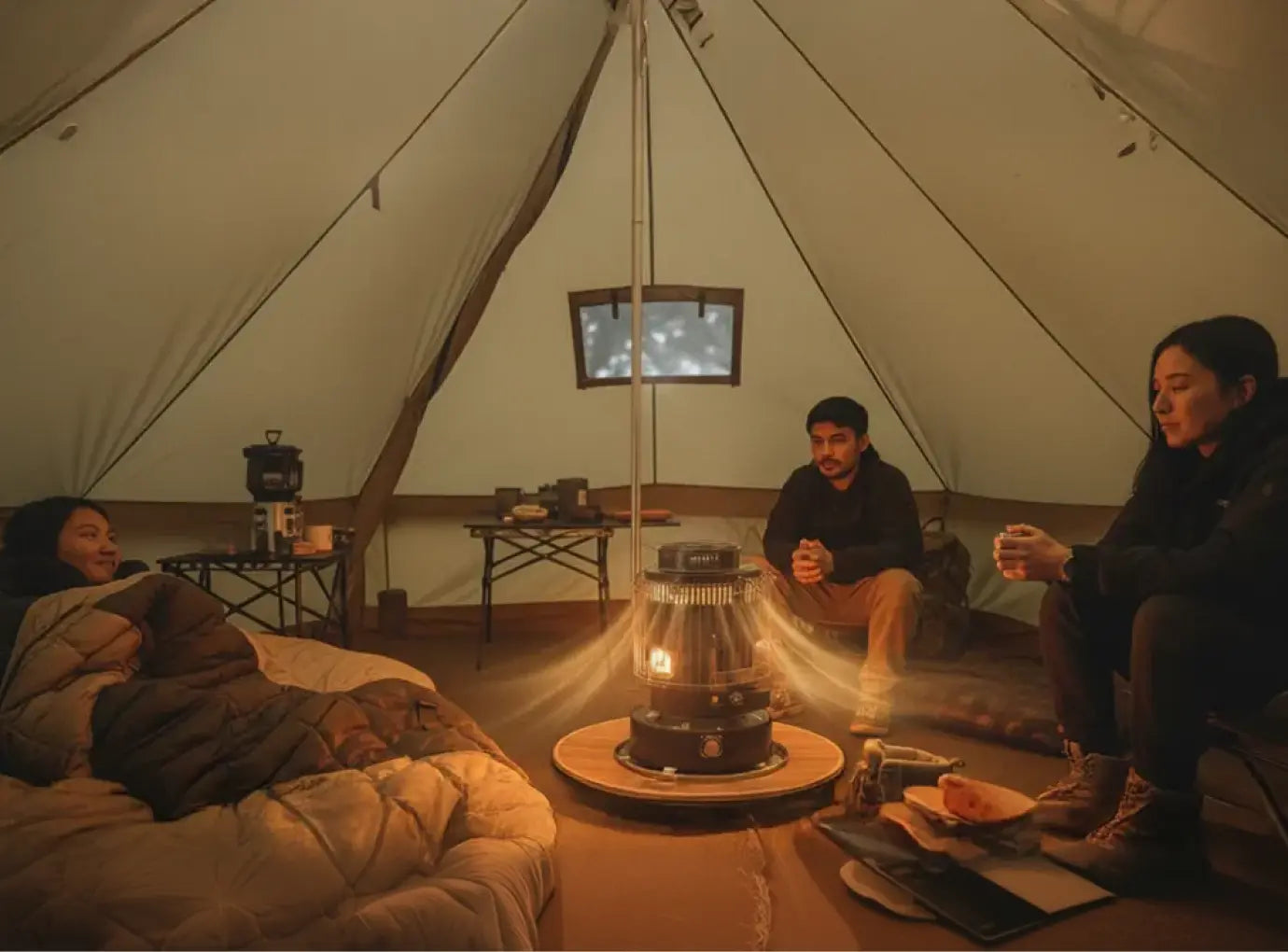
Your heater or wood stove warms the air →warm air rises → cools → drops back down.
If this loop is blocked, the tent never warms properly.
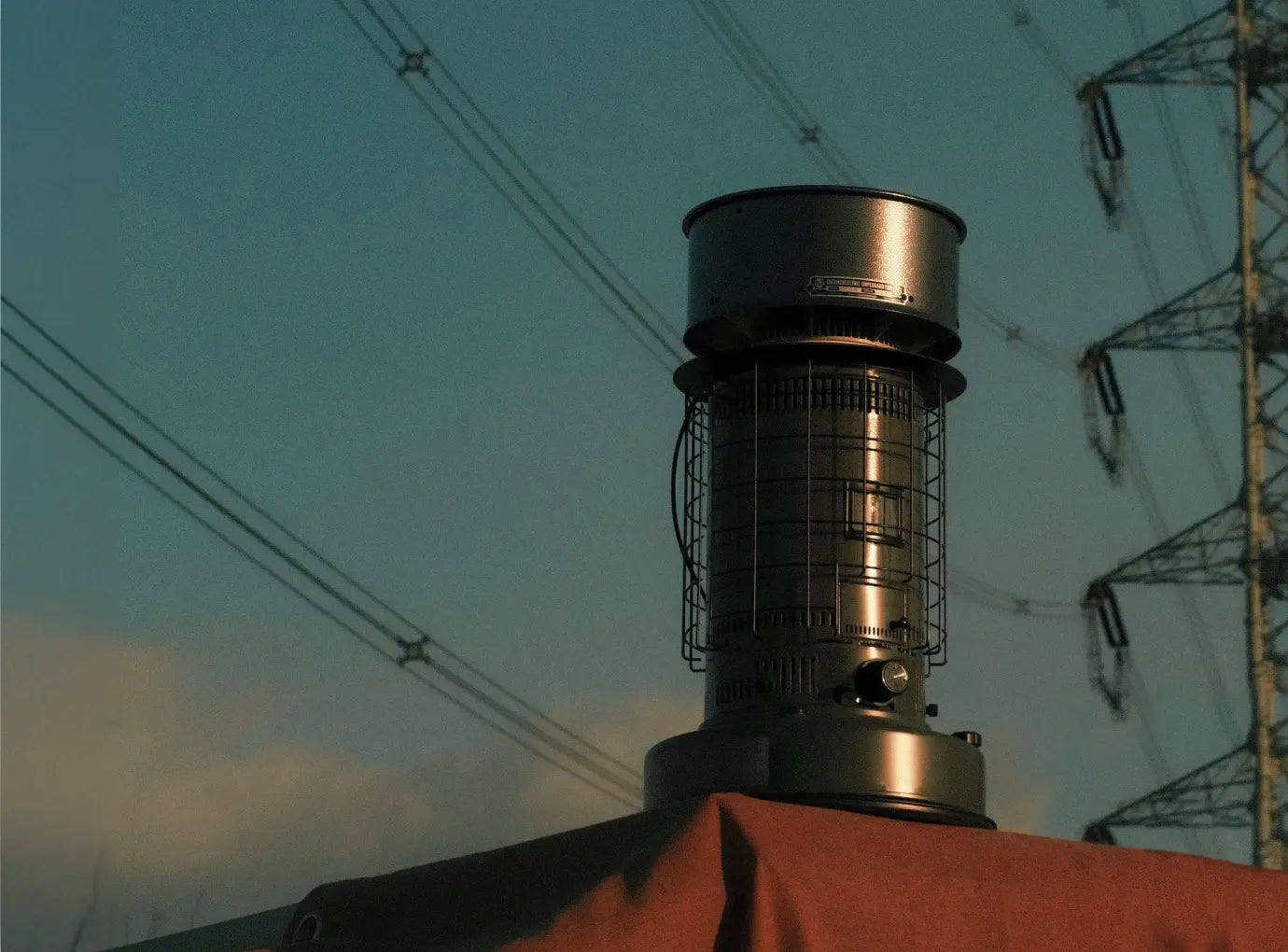
Most propane heaters, like the Giga Sun Heater, are designed to warm the surrounding air rapidly to begin this cycle.
Conversely, a wood stove creates a natural chimney draft through its flue pipe. Compact, high-efficiency models like the Wood & Burn Pro PS or the Field Stove reinforce this airflow pattern naturally while drying the air.
3. Radiation (Direct Heat)
The direct “glow” of heat you feel when standing near a heater or stove.
Propane heaters produce strong, efficient radiant heat.
Wood stoves deliver deep, long-lasting radiant warmth from their entire metal body. Fire pits like the Uniconn-M with Light Box maximize this effect, allowing you to enjoy the visual warmth of the flames while radiating heat outward.

Tent Featured :Snow Peak Merak Pro
❄️ 2. The Real Reason Your Tent Feels Cold: Humidity and Condensation
Most campers assume their heater isn’t strong enough.
But in reality, moisture is the main culprit.
- Water conducts heat up to 25x faster than air
- When moisture turns into condensation on the tent walls,
- Your tent becomes a giant “cold window”
- Heat escapes rapidly
- The tent feels cold even with the heater running
This is why winter tents often feel damp, heavy, and chilly at night.
✅ The Only True Solution: Ventilation
Ventilation removes humid air and prevents condensation.
Counterintuitive, yes—but more ventilation = a warmer tent.
⚠️ Critical Safety Note: Carbon Monoxide (CO) Ventilation isn't just about warmth—it's about survival. Fuel-burning heaters and stoves consume oxygen and can produce deadly Carbon Monoxide. Never completely seal your tent. Always maintain airflow and keep a battery-operated CO detector nearby to ensure a safe sleep environment.

🌬 3. Warmth Comes From Airflow, Not From Blocking Cold Air
Trying to block every draft is a common mistake.
A warm tent requires a continuous airflow loop:
👉 Cold, dry air enters from the bottom
👉 Moves across the tent
👉 Passes near the heater/stove and warms up
👉 Warm air rises to the top
👉 Exits through an upper vent
This process removes humidity and prevents cold pockets. However, because heat rises, the floor often stays cold.A heat-powered stove fan—such as the TUF Heat-Powered Stove Fan MK2 —can help push warm air outward and downward, improving overall heat circulation inside the tent.

🏕 4. Single-Wall vs. Double-Wall vs. Tipi Tents: Which Stay Warmest?
Single-Wall Tents
Light and simple, but prone to condensation. Heat escapes quickly.
Double-Wall Tents
Fly + inner tent create an insulating air layer (like a padded jacket). Much more efficient for winter.
Tipi (TP) Tents
The tall central peak creates a natural chimney effect, offering excellent airflow and moisture control.
For the most stable winter performance, Tipi and double-wall tents provide the best results, especially when paired with propane heaters.

🔥 5. How to Optimize YourHeating System for Maximum Warmth
✔ Best Heater Placement
- Center of the tent or as close as safely possible
- Keep at least one side open for airflow
- Avoid blocking warm air with storage bins or coolers
✔Why It Works
-
Maximizes Radiant Heat: Radiant energy projects 360° outward to the entire living space, rather than being wasted by heating a single wall.
- Optimizes Air Circulation: Warm air naturally rises from the center and circulates downward evenly to all corners, reinforcing the convection loop.
-
Eliminates Cold Spots: By balancing both heat projection and airflow, you avoid the common "one side burning, one side freezing" problem.
✔ Using an Inner Tent?
Keep the inner doors open so warm air can circulate.
The gap between the fly and inner tent acts as insulation—much like the loft of a high-quality down sleeping bag such as the Nanga Aurora Light.

🧊 6. Ground Cold: The Silent Heat Killer
Even if the tent walls are warm, the ground will continuously drain heat through conduction.
Here’s what happens under your sleeping area:
- Cold ground cools the air above it
- Cold air sinks and forms a “cold pool”
- This fights your heater’s airflow loop
- The tent feels cold near the floor
❄️ How to Fix Ground Cold
1. Use a groundsheet / footprint
Create a Moisture Barrier Even a thin one adds a protective air gap. A durablegroundsheet, such as the MAC Outdoor Collection, effectively blocks dampness rising from the frozen earth.
2. Use high R-value sleeping pads (R6–R7+)
Compressed insulation in a sleeping bag offers little warmth underneath you. You need a mat with high thermal resistance. Options like the Sparrow Collection isolate your body heat from the cold floor.
3. Double-layer flooring (optional but powerful)
With ground insulation sorted, your bag is the final heat trap. Models like the Junwoo Outdoor Brespo Micro Ultra Light or Brespo Micro Ultra Light 2 are designed to handle freezing temps and internal moisture.
🔄 7. The One Principle More Important Than Any Gear: “Design Your Air Loop”
Winter gear plays an important role,
but what truly completes a warm tent is how air moves inside the space.
A well-designed airflow loop:
- reduces condensation
- helps heat stay inside longer
- allows propane heaters to warm the tent more evenly
When airflow and gear work together,
the entire winter setup becomes noticeably more comfortable and efficient.
🌲 Winter Camping Is Science — Master the Structure, and Warmth Follows
Winter camping becomes dramatically easier when you understand the physics behind heat, airflow, and moisture.
Because at the end of the day:
Quality gear helps.
Understanding airflow completes the system.
Together, they create real warmth.
🛒Recommended Winter Camping Gear
- Propane heater : Giga Sun Heater
- Wood stove : Pro PS , Field Stove , Uniconn-M with Light Box
- Insulated sleeping pad or high-R-value camping mat : Sparrow Collection
- Customizable Groundsheet : MAC Outdoor collection
- Sleeping bag : Nanga - Aurora Light , Junwoo Outdoor - Brespo Micro Ultra Light , Junwoo Outdoor - Brespo Micro Ultra Light2
- Heat-powered stove fan : TUF Heat-Powered Stove Fan MK2
Content Source
This article is based on insights from the Korean camping YouTuber Seonbal Daewon (meaning “advance scout”), specifically his video on “A Warm Tent Is Science”.
About the Creator
Korean camping YouTuber 선발대원 (Seonbal Daewon, meaning “advance scout”) runs a well-known channel with more than 30,000 subscribers, sharing in-depth camping content ranging from tent reviews and gear testing to real-world winter camping setups. His focus on practical experience, clear explanations, and the science of heat and airflow has made him a trusted source for campers who value comfort and safety in cold-weather conditions.